Treatment challenge
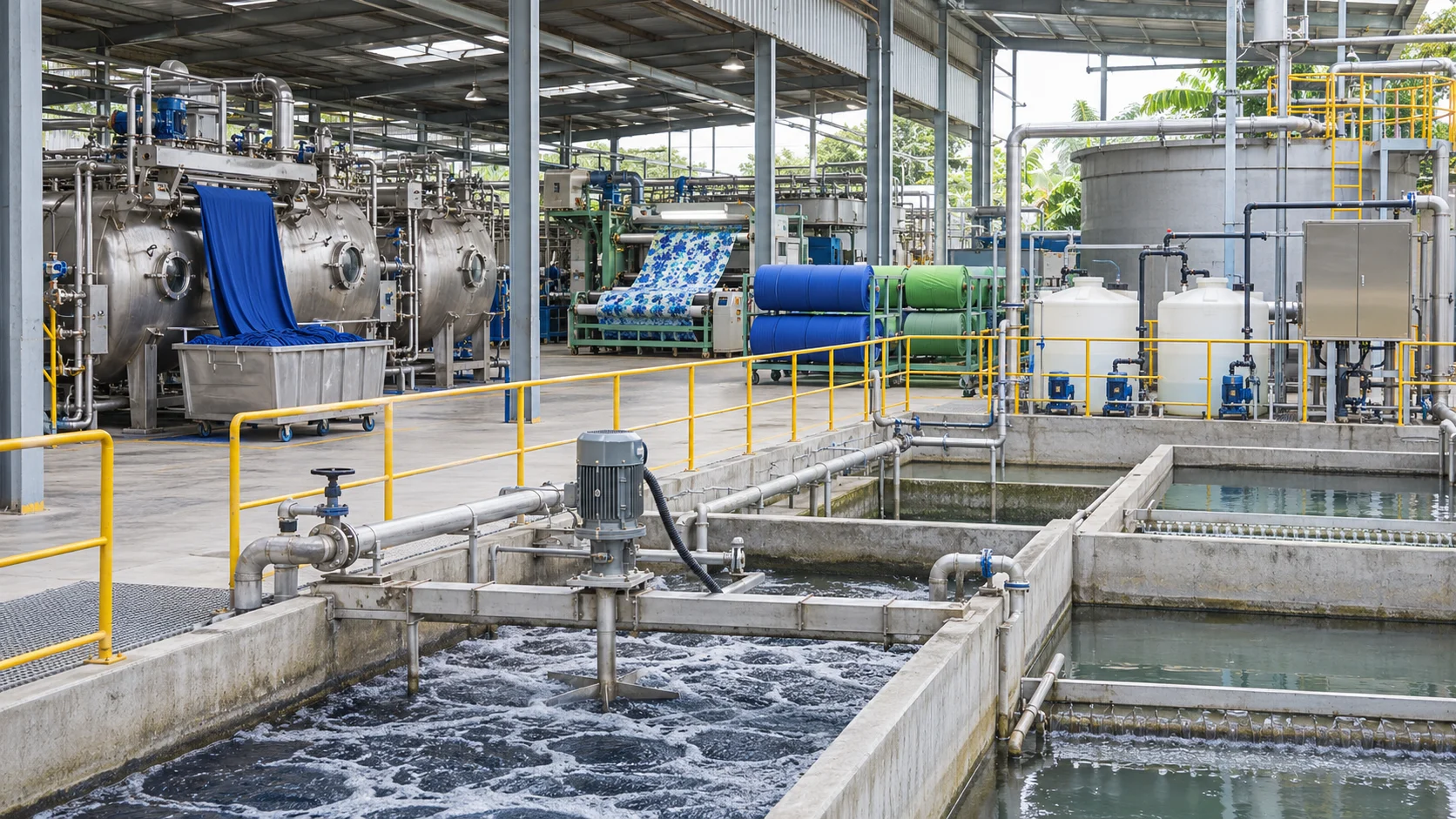
Dyes, auxiliaries, production batches and cleaning changeovers affect wastewater quality. A single test may not capture the variation seen during ongoing operation.
Pollutants to assess
- COD / BOD5
- Color and suspended solids
- Ammonia, total nitrogen and total phosphorus
- pH and auxiliary-related contaminants
Typical applications
- Textile dyeing wastewater projects
- Textile printing wastewater projects
- Existing dyeing and printing wastewater plant upgrades
Process flow references
03Source: redrawn from the original flowchart, preserving its nodes and sequence.
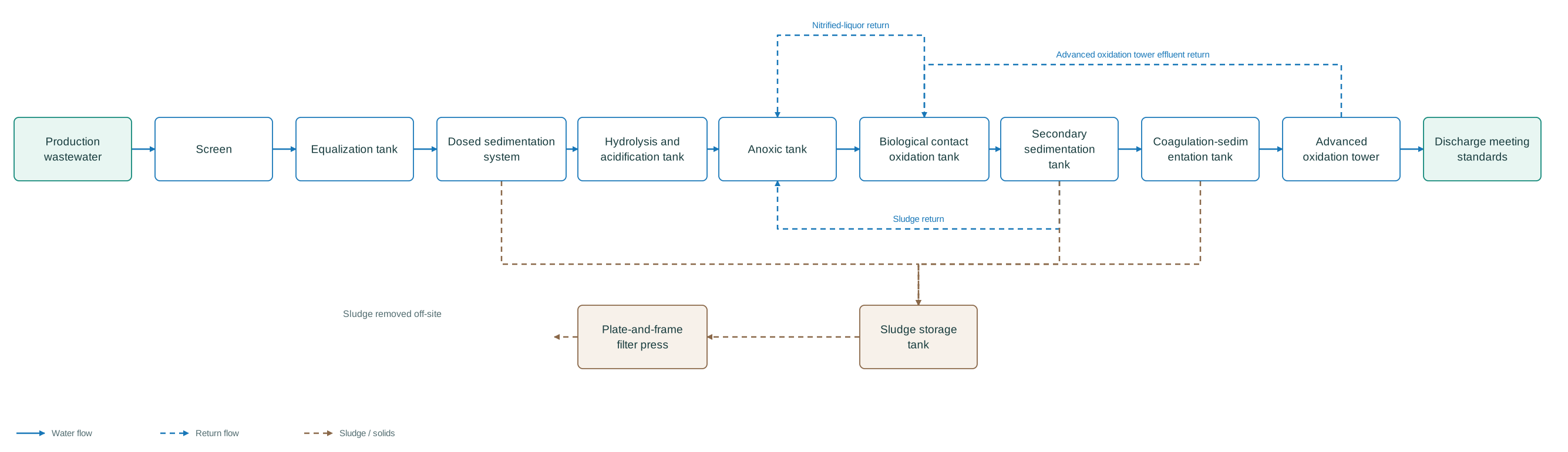
Source: redrawn from the original flowchart, preserving its nodes and sequence.
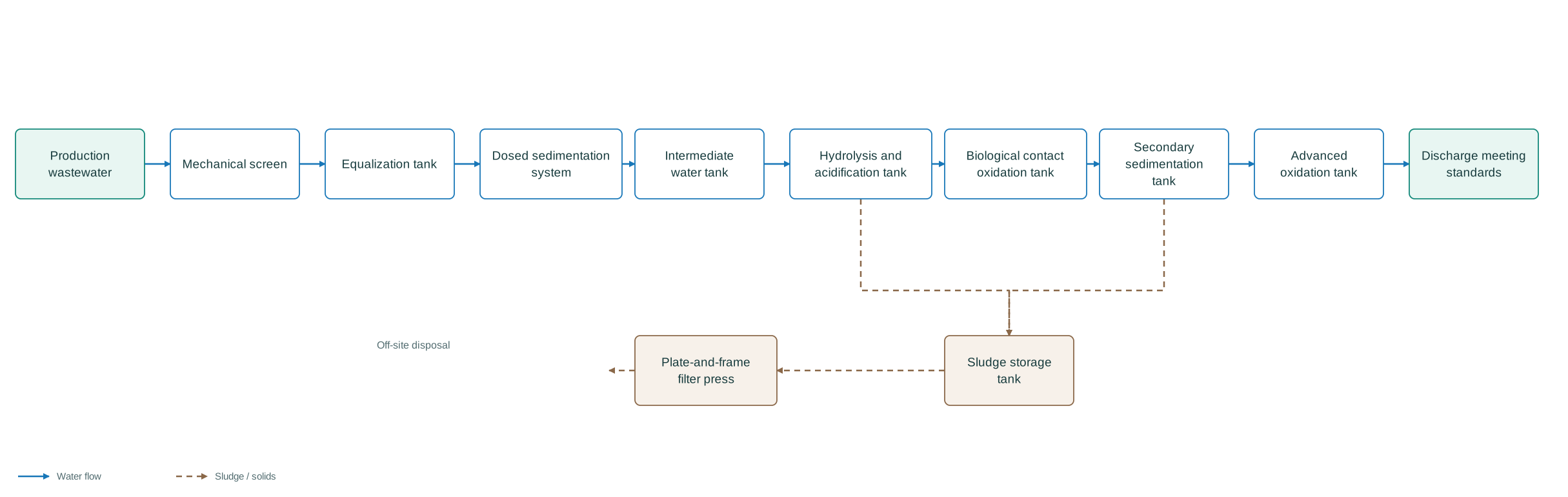
Source: redrawn from the original flowchart, preserving its nodes and sequence.
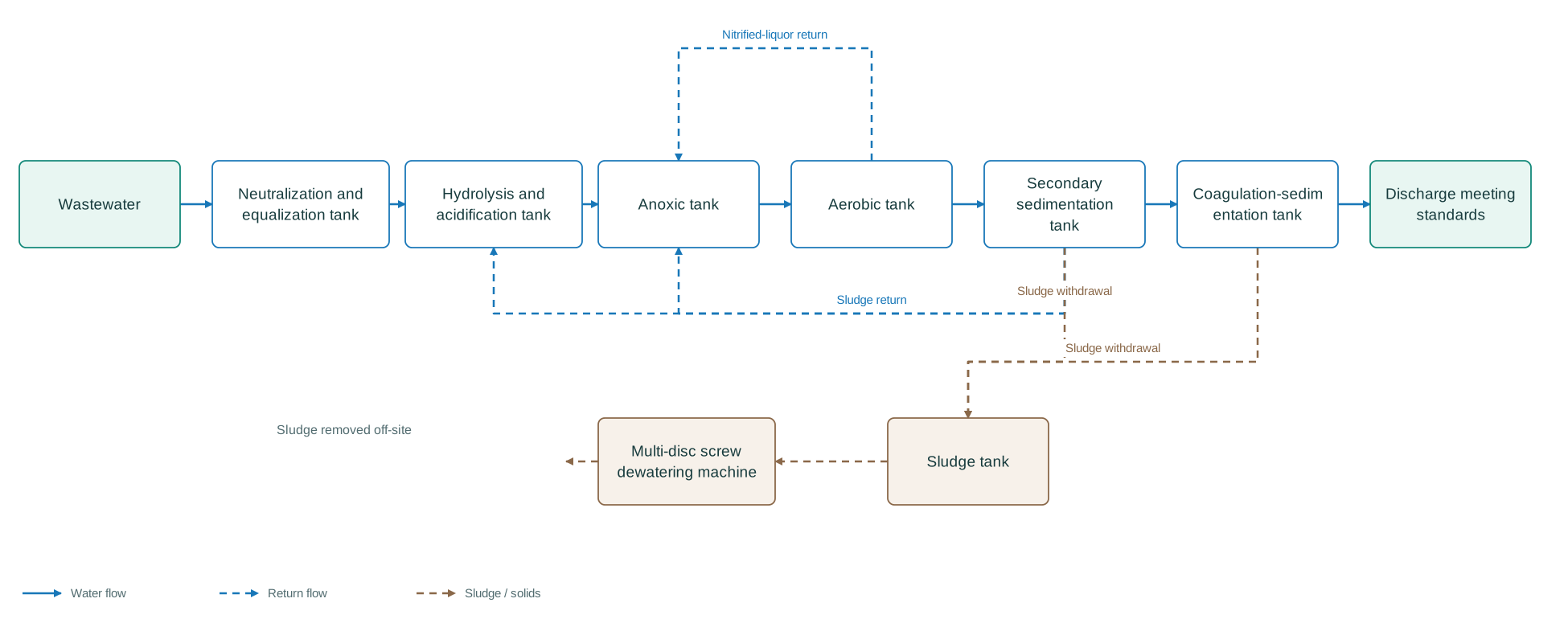
Typical process illustration, not a final engineering design. Water quality, flow, discharge requirements and site conditions must be reviewed; no effluent performance is promised here.
Core process combinations from the source
Equipment to consider
- Neutralization and equalization systems
- Coagulation and sedimentation equipment
- Hydrolysis and acidification systems
- Biological contact oxidation systems
- Advanced oxidation systems
Information needed
- Fabrics, dyes, auxiliaries and production stages
- Batch discharge and cleaning patterns with average and peak flow
- Representative wastewater, color and salinity tests
- Discharge destination, applicable requirements and existing facilities
This information is for proposal discussions, not a fixed configuration. Color, salinity and biodegradability require test data or trials; final equipment selection and treatment targets need project-specific technical confirmation.
Discuss your requirements