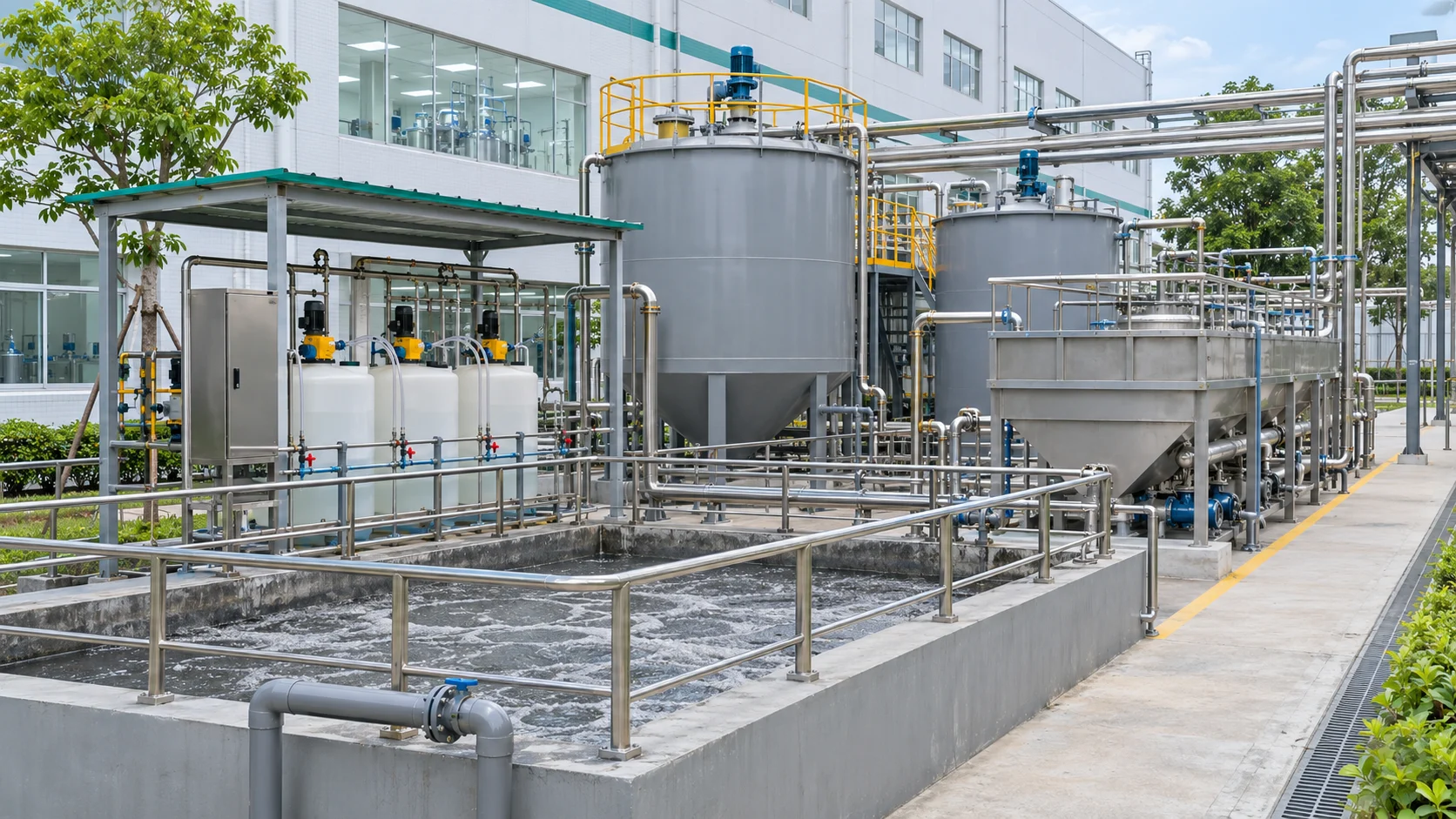
Treatment challenge
Product and batch changes can alter persistent organic loads, ammonia and inhibitory substances. Combined samples may not reveal high-risk streams.
Pollutants to assess
- COD and biodegradable organics
- Ammonia and total nitrogen
- Suspended solids
- Salinity and raw-material-related contaminants
Typical applications
- Chemical production wastewater projects
- Pharmaceutical production wastewater projects
- Existing chemical and pharmaceutical wastewater plant upgrades
Process flow references
05Source: redrawn from the original flowchart, preserving its nodes and sequence.
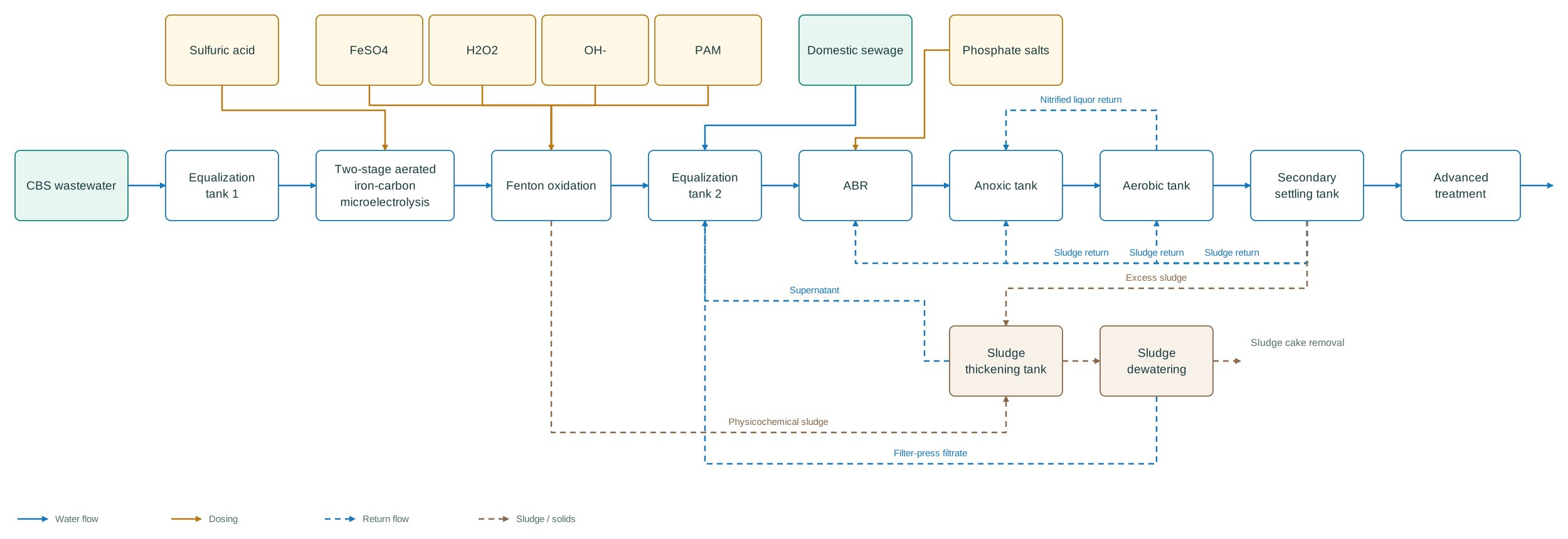
Source: redrawn from the original flowchart, preserving its nodes and sequence.
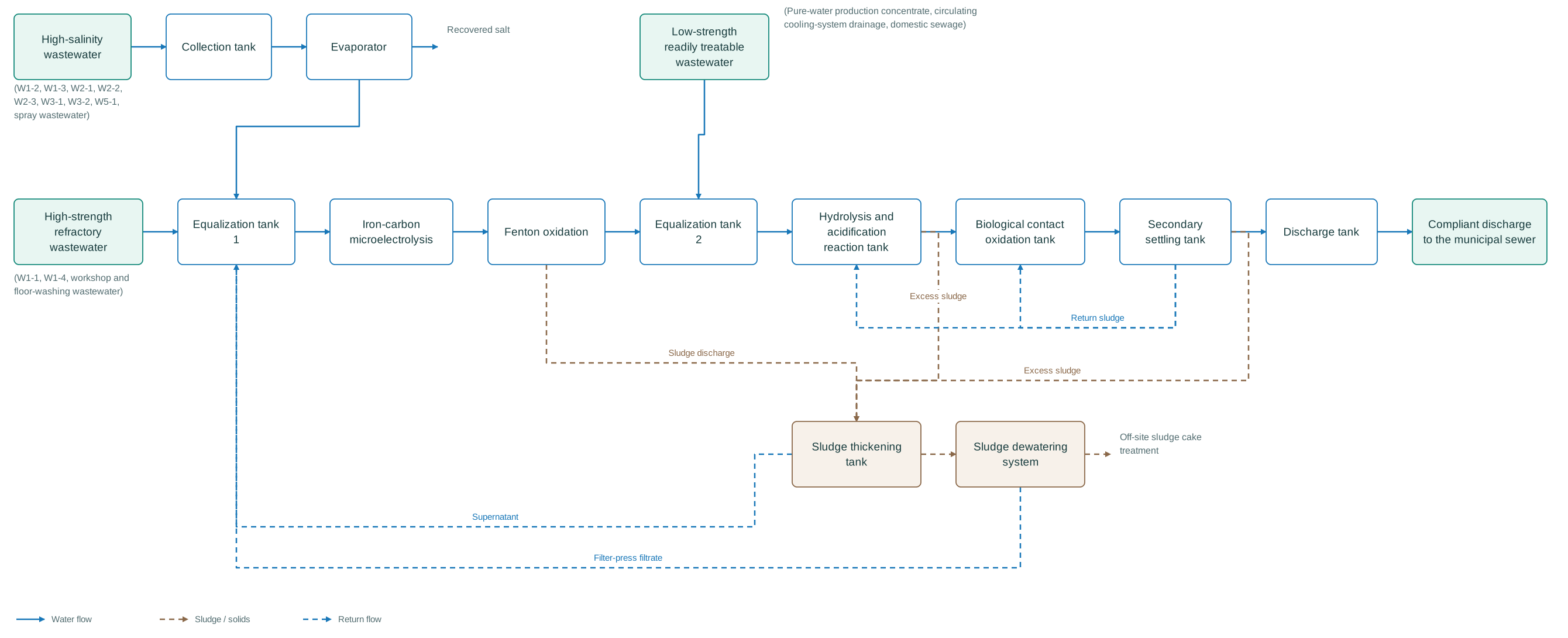
Source: redrawn from the original flowchart, preserving its nodes and sequence.
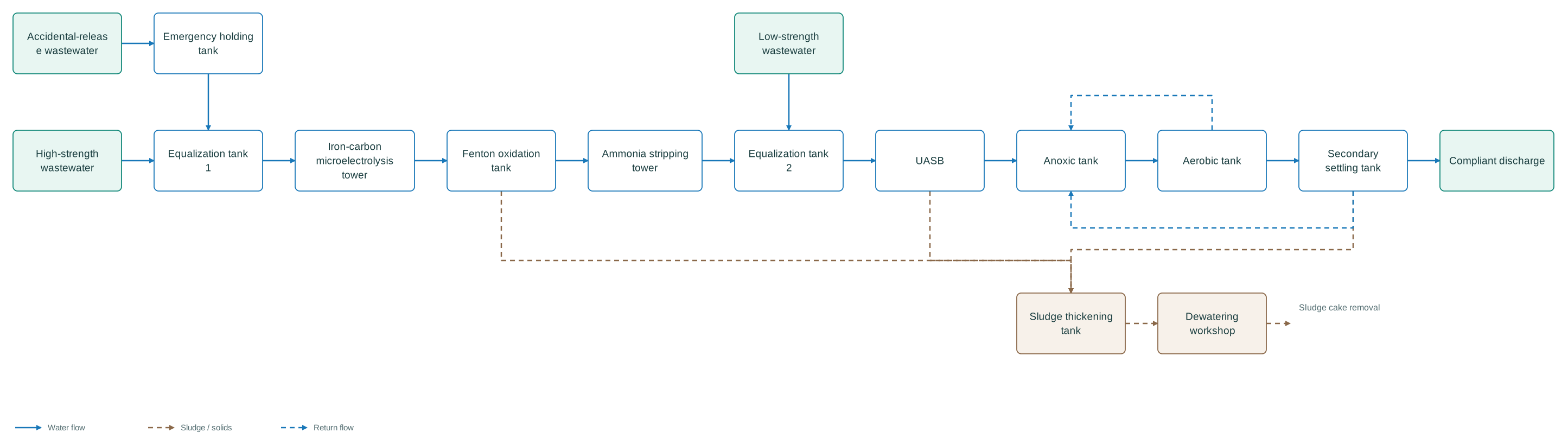
Source: redrawn from the original flowchart, preserving its nodes and sequence.
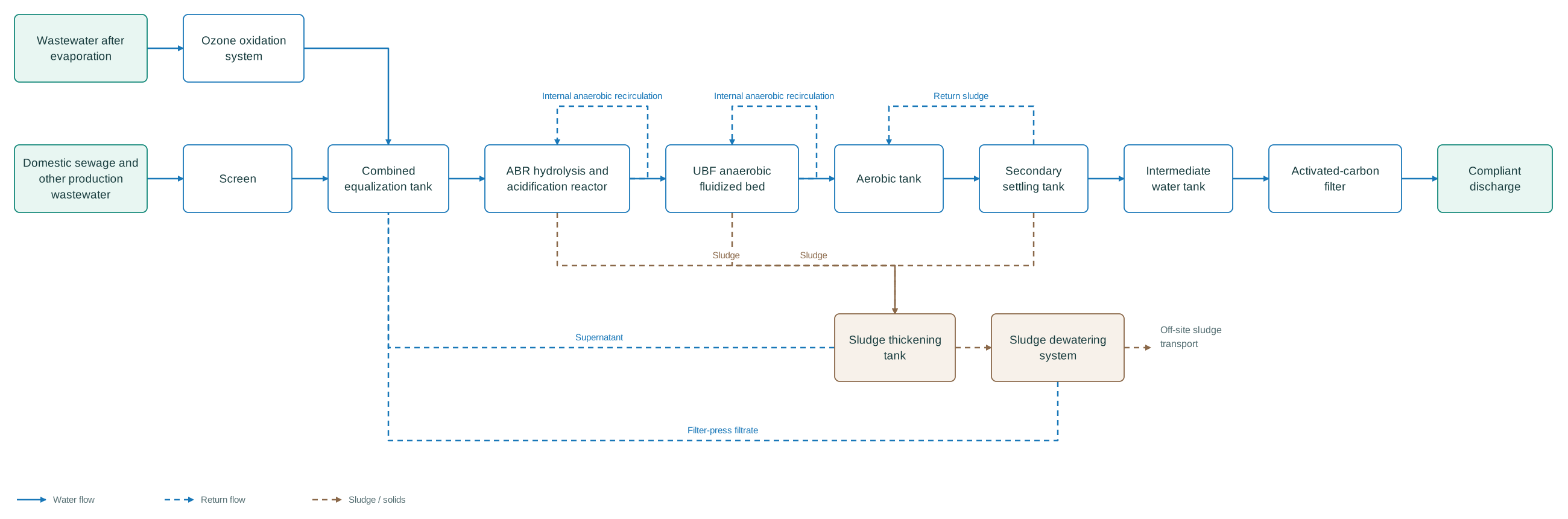
Source: redrawn from the original flowchart, preserving its nodes and sequence.
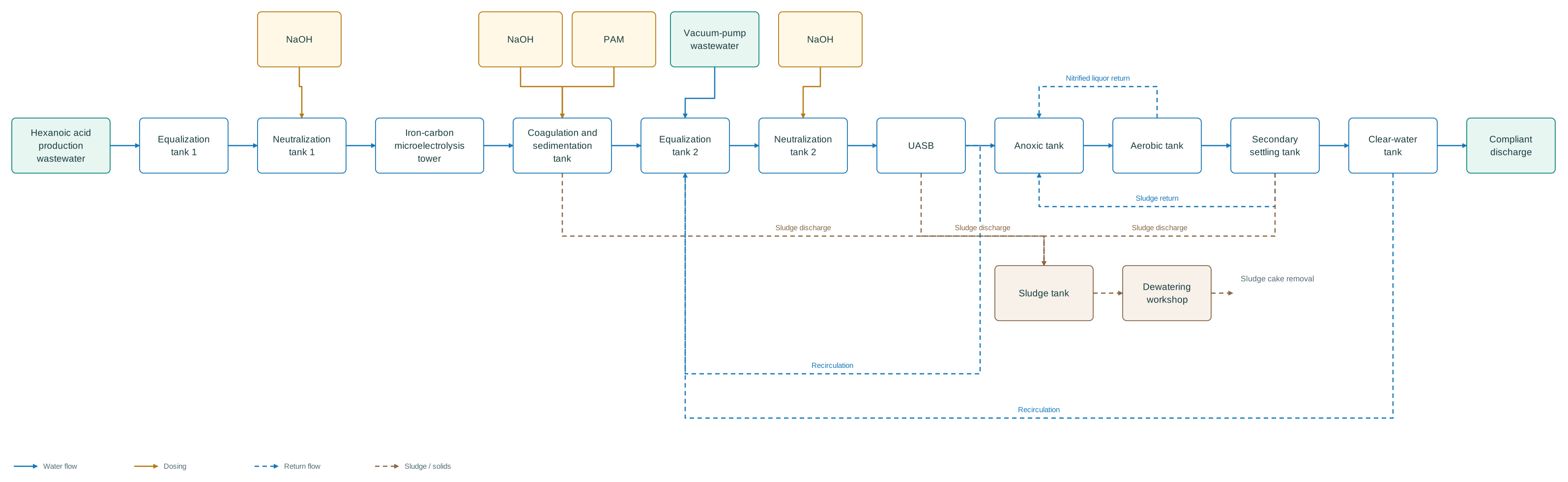
Typical process illustration, not a final engineering design. Water quality, flow, discharge requirements and site conditions must be reviewed; no effluent performance is promised here.
Core process combinations from the source
Equipment to consider
- Iron-carbon micro-electrolysis equipment
- Fenton oxidation systems
- Anaerobic baffled reactors (ABR)
- Ammonia stripping towers
- Adsorption filtration equipment
Information needed
- Products, production stages, raw materials and stream inventory
- Discharge batches, flows and representative stream-specific tests
- Toxicity, salinity, biodegradability and available trial data
- Discharge requirements, site conditions and existing facilities
This is not a design document; the equipment categories come from separate source options and are not all required together. Inhibition, salinity and specific contaminants need dedicated review and, where needed, trials before configuration and targets are agreed.
Discuss your requirements