Treatment challenge
Raw material changes, shifts and intensive cleaning can create different flow and load peaks. Composite sampling may conceal periods of high loading.
Pollutants to assess
- COD / BOD5
- Fats, oils and grease
- Suspended solids
- Ammonia, total nitrogen and total phosphorus
Typical applications
- Agricultural produce and vegetable processing
- Meat product and seafood processing
- Food ingredient and seasoning production
- Existing food processing wastewater plant upgrades
Process flow references
05Source: redrawn from the original flowchart, preserving its nodes and sequence.
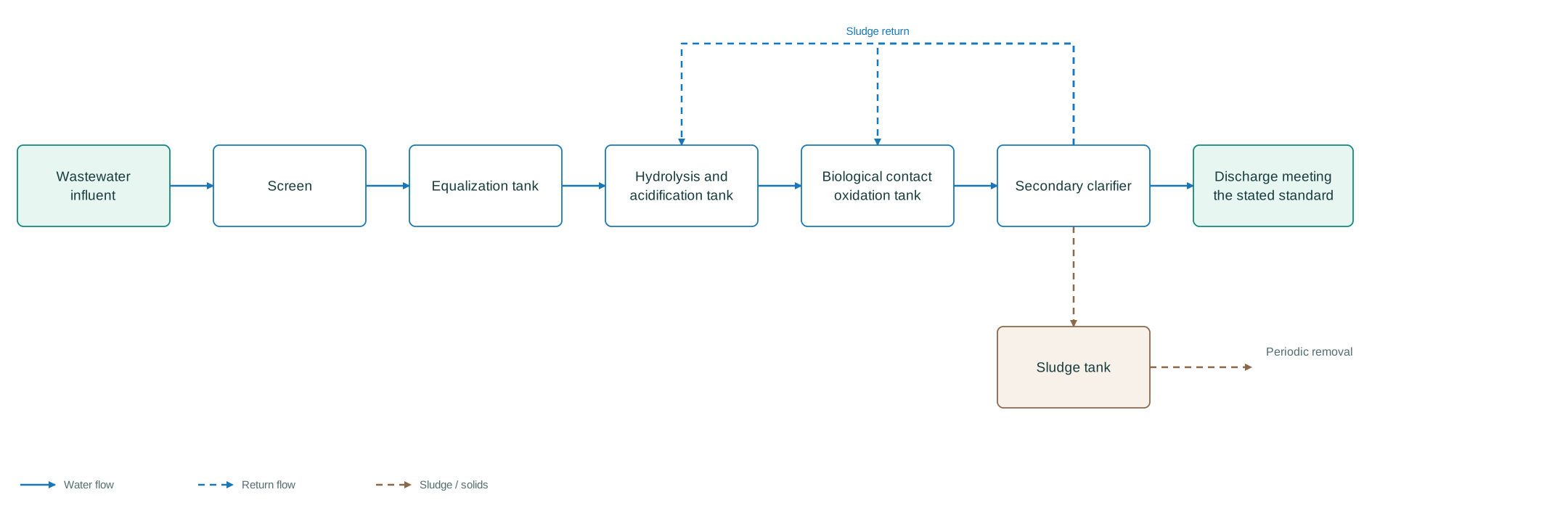
Source: redrawn from the original flowchart, preserving its nodes and sequence.
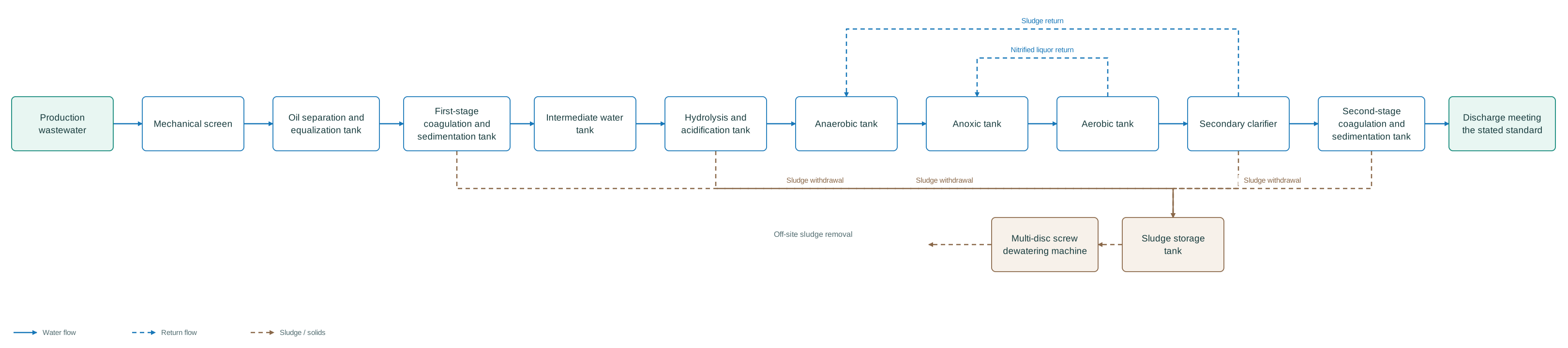
Source: redrawn from the original flowchart, preserving its nodes and sequence.
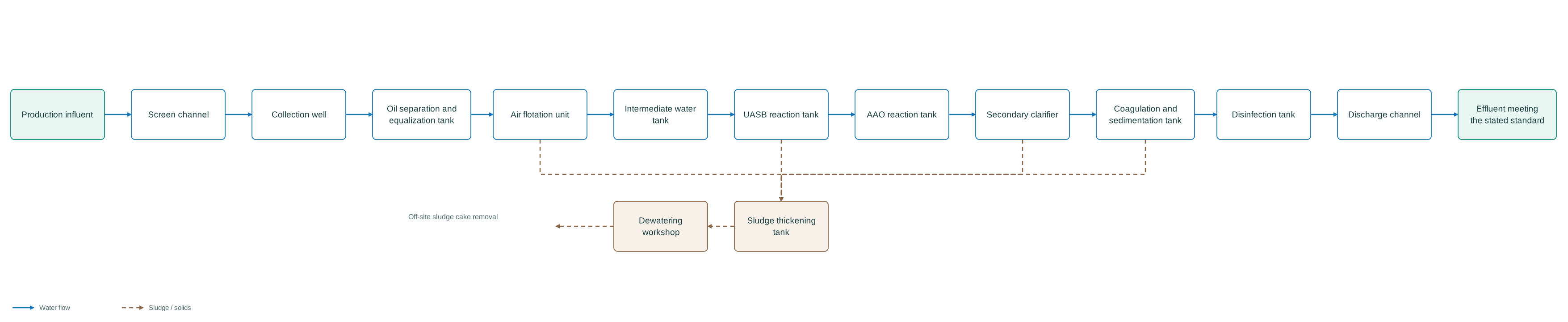
Source: redrawn from the original flowchart, preserving its nodes and sequence.
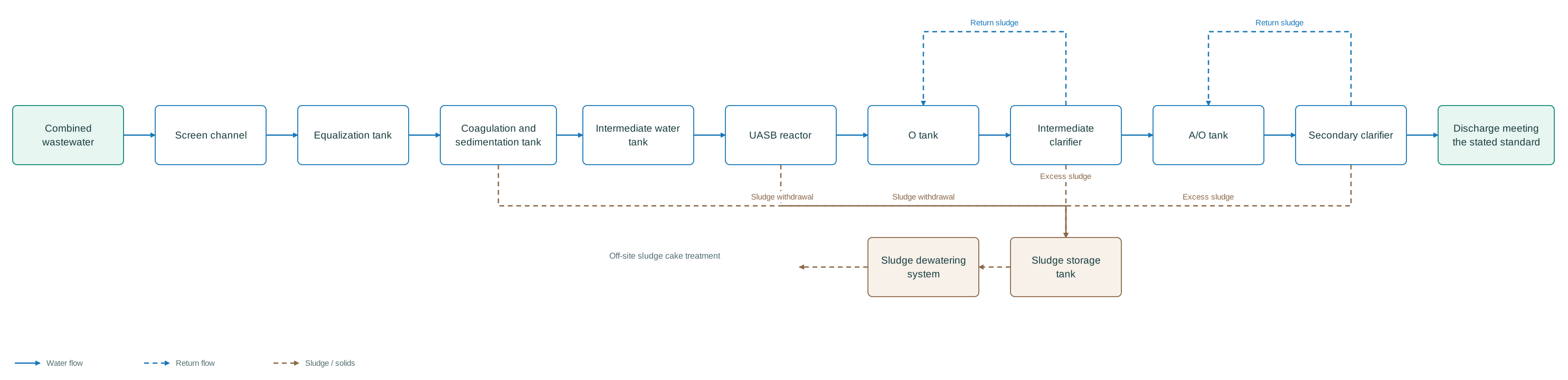
Source: redrawn from the original flowchart, preserving its nodes and sequence.
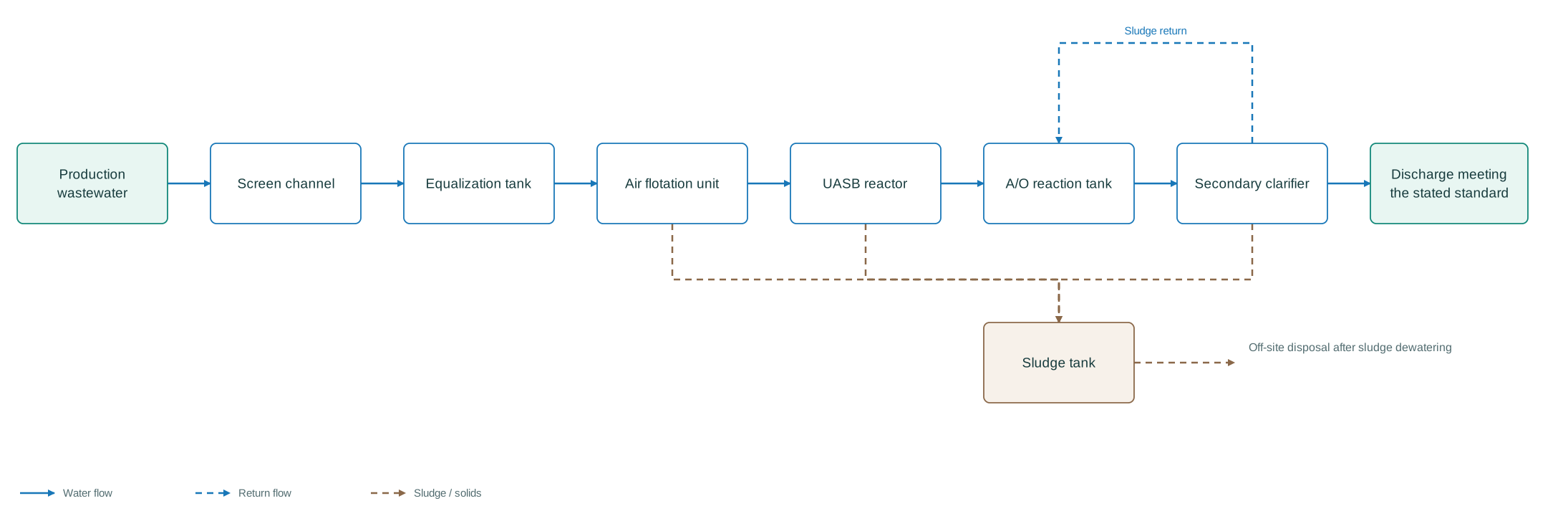
Typical process illustration, not a final engineering design. Water quality, flow, discharge requirements and site conditions must be reviewed; no effluent performance is promised here.
Core process combinations from the source
Equipment to consider
- Flotation equipment
- Coagulation and sedimentation equipment
- Hydrolysis and acidification systems
- UASB anaerobic reactors
- A/O biological treatment systems
Information needed
- Raw materials, products and wastewater sources
- Production and cleaning schedules with average and peak flow
- Representative tests and cleaning chemical information
- Discharge destination, site conditions and existing facilities
This information is for proposal discussions; the equipment categories belong to different source process options, not one fixed package. Salinity, cleaning chemicals and biodegradability require review before selection or performance targets can be agreed.
Discuss your requirements